Nice Travel Guide: Costs, Cruise Caps and Day Trips in 2026
by RuinMyTrip Editorial · Aug 3, 2026
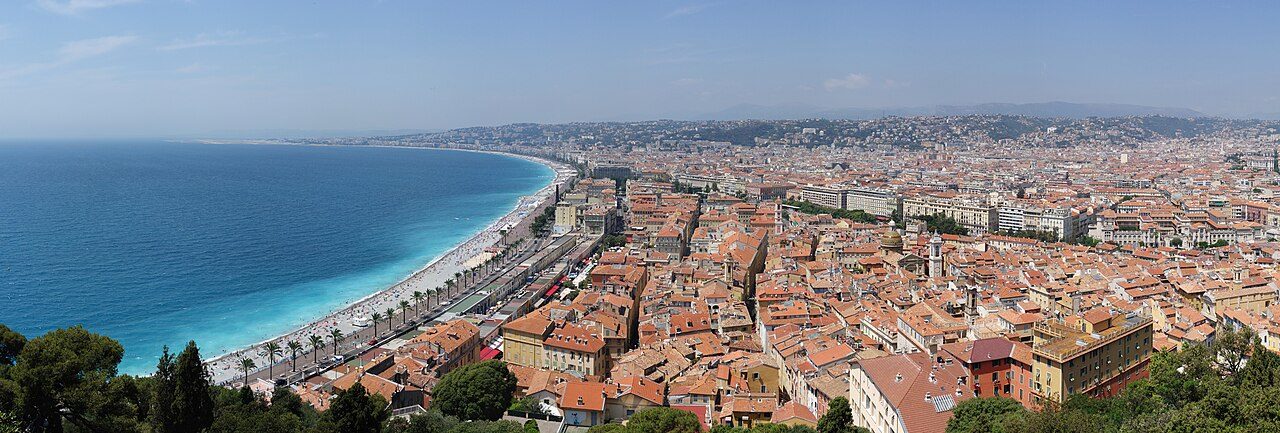
What the new Riviera cruise rules change, what the beach is actually like, and how to use the coastal railway to make Nice worth its prices.
Who is going to Nice?
Going soon? Add your dates. Anyone who posts overlapping dates later sees you, and you hear about it.
Looking for a travel buddy? Ask travelers a question What should tourists avoid? Post what went wrong on your trip See who is going Travel buddies in France
Questions from the RuinMyTrip team. Answer one and start the Nice conversation:
- Which neighborhood would you stay in on a first visit to Nice?
- One thing you wish you had known before going to Nice?
- What is overrated in Nice, and what is worth it instead?
Nobody sees your dates until you post them, and nobody can message you until you say yes.
Start with what Nice is for. It is the most practical base on the French Riviera, because it has the airport, the old town, and the coastal railway that runs the length of the coast. Monaco is about twenty minutes away, Villefranche-sur-Mer is closer, and Antibes, Cannes and Menton are all inside an hour for a few euros. If you plan a week in Nice as a beach week you will spend a lot of money to lie on stones. If you plan it as a base and go somewhere each morning, it is one of the best-value cultural weeks in the south of France despite the prices.
The cruise question has been the city's public fight. Mayor Christian Estrosi moved to ban ships carrying more than 900 passengers, a threshold that would have eliminated roughly 70 per cent of the calls scheduled for Nice. The first attempt was withdrawn, the second was suspended, and by March 2025 the city had backtracked in the face of business opposition. The replacement is a unified framework for the Riviera ports that applies from January 2026: a maximum of 3,000 passengers disembarking per port per stopover, an annual average per port that must stay below 2,000, and a ceiling of 15 ships per port per month across July and August, with compliant ships given priority for stopover authorisations. On top of that, the French Senate approved a 15 euro per-passenger tax on international cruise ships for each stop in a French port under a polluters-pay principle. For a land visitor, this means the worst single-day surges in Vieux Nice should soften, but a 3,000-passenger day is still a busy day in a small old town.
On money, plan for Riviera pricing and then add the tourist tax. Nice and Cannes charge roughly 1.50 to 6 euros per person per night depending on the class of the property; unclassified accommodation, which covers most short-term rentals, is charged between 1 and 5 per cent of the per-person nightly rate excluding VAT, capped at the highest local rate. Booking platforms usually collect it, but it is a real line item on a family stay. Short-term rental supply is also in flux: the cap on renting a primary residence went from 120 nights to 90 on 1 January 2026 and back to 120 in June 2026, exceeding it carries civil fines of up to 15,000 euros, and registration consolidates into a single national online service from 20 May 2026.
The beach deserves a plain warning. It is pebble, not sand, along the length of the Promenade des Anglais. The public sections are free and perfectly usable with a mat and water shoes; the comfortable sections with loungers and service are private concessions and charge a day rate. Anyone arriving with a Caribbean picture in their head is going to be annoyed on day one, and it is entirely avoidable by knowing in advance.
What to actually do: Vieux Nice is a working old town with real restaurants behind the tourist frontage, the Cours Saleya morning market is the best cheap eating in the city, socca is the local speciality and worth the queue, and the Musee Matisse and the Musee National Marc Chagall are both serious collections. Castle Hill gives the view over the Baie des Anges that every photograph of Nice is taken from, and it is free.
On timing, May to June and September deliver warm sea and lower prices than the July to August peak, which is when both the accommodation market and the cruise calendar are at their tightest. Winter on the Riviera is mild, very quiet and much cheaper, and the museums and the coastal train work exactly the same way.
Been there? Correct us.
Prices move, routes close, places go downhill. A first-hand review is worth more than this guide and will be shown alongside it.
Share your experienceComments
Start the conversation.