Home / Guides / Planning Banff Without Losing the Shuttle Lottery: Costs, Months and Access Rules for 2026
Planning Banff Without Losing the Shuttle Lottery: Costs, Months and Access Rules for 2026
by RuinMyTrip Editorial · Jul 25, 2026
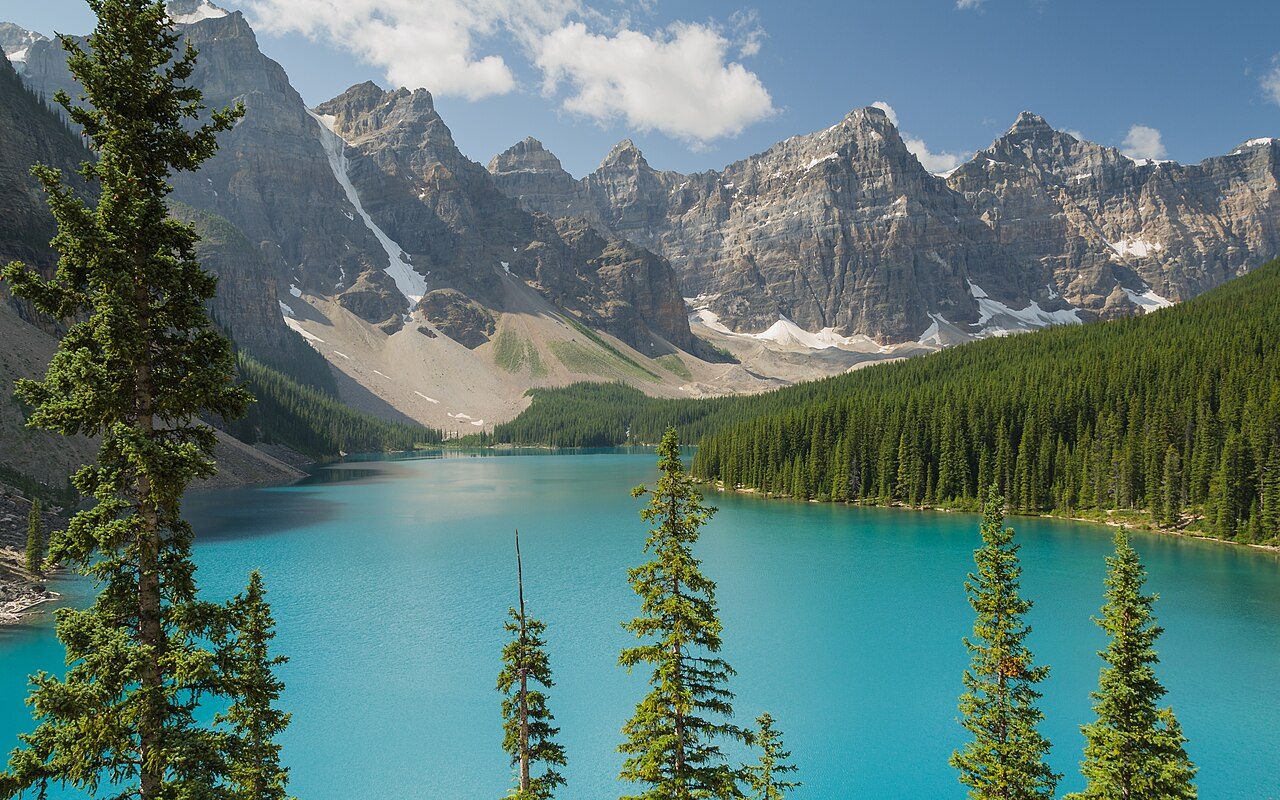
A practical breakdown of Banff's reservation systems, real parking and transit costs, month-by-month timing, four sites worth the effort and the wildlife and winter driving risks.
Timing decides the trip. June through August is peak, with long daylight, every trail open and the heaviest congestion, made worse in 2026 by free park admission from June 19 to September 7 under the Canada Strong Pass. Late September into the first week of October is the sweet spot, when the alpine larches turn gold above Moraine Lake for roughly two weeks and the crowds thin on weekdays, though weekends on Larch Valley and Sentinel Pass remain heavily used. May and early June are quiet but many high trails are still under snow and the Bow Valley Parkway carries its wildlife travel restriction from March 1 to June 25. November through April is ski season, cheaper and genuinely beautiful, but the western Minnewanka Loop road is closed to driving from November through May and the Icefields Parkway becomes a serious winter drive.
Getting in from Calgary International Airport is straightforward. Banff Airporter runs the roughly two-hour route at CAD 88.90 one way for adults, CAD 80.01 for seniors and CAD 44.45 for children aged 6 to 17, with round trips at CAD 177.80 adult, and GST is not included in the quoted fare. Renting a car costs more once you add parking, but gives access to the Icefields Parkway and trailheads that no shuttle serves. Whichever you choose, you still need a park pass unless you travel inside the free admission window.
Once there, Roam Transit is the backbone. Local Banff routes cost CAD 2 adult and CAD 1 for youth and seniors, Route 3 to Canmore is CAD 6, and Route 8X to Lake Louise is CAD 12.50 adult and CAD 6.25 youth or senior, with children 12 and under free on everything. A system-wide day pass at CAD 30 pays for itself the moment you make two regional trips. If you drive, park free at the Train Station lot, Bow Avenue or the upper Bear Street Parkade rather than feeding CAD 12 an hour into downtown meters between May 1 and October 31.
Four places deserve your effort. Moraine Lake is the signature view and is reachable only by Parks Canada shuttle, licensed operator or lodge stay, since the road has been closed to private cars year-round since 2023; the shuttle costs CAD 12.75 adult plus a CAD 3.50 online booking fee and runs June 1 to October 12. Lake Louise is served by its own shuttle from May 15 to October 12 and by a Lake Connector between the two lakes every 30 minutes from 7 a.m. to 6 p.m.; going by shuttle avoids the CAD 42 lakeshore parking fee entirely. The Banff Upper Hot Springs on Sulphur Mountain charges CAD 19.75 adult, CAD 17.25 senior or youth and CAD 64.25 family, sells only at the door with no advance booking, and sits in the Sulphur Mountain paid parking pilot zone at CAD 17.50 per vehicle per day from 9 a.m. to 9 p.m. between May 15 and October 12. The Icefields Parkway north toward the Columbia Icefield is the one drive worth a full day, and it is free to travel with a valid park pass.
The place worth skipping is the downtown Banff Avenue shopping strip at midday in July, which is where a large share of those 4.5 million annual visitors end up and where the parking meters are most expensive.
On budget, a realistic mid-range day in summer runs about USD 260 to USD 400 per person. Accommodation is the dominant line, with mid-range Banff or Canmore rooms commonly landing between USD 180 and USD 320 a night in high season, which is roughly USD 90 to USD 160 per person on a double. Food adds about USD 60 to USD 90 for a cafe breakfast, a packed lunch and a sit-down dinner. Transport is modest if you use transit, around USD 25 for a system-wide day pass, or far more if you drive and park at Lake Louise, where CAD 42 alone is close to USD 30. Activities such as the hot springs or a shuttle ticket add USD 15 to USD 60. Camping cuts the total sharply: an unserviced site at Two Jack Main is CAD 26.75 and Lake Louise unserviced is CAD 34.00 per night, with a further 25 percent off during the Canada Strong Pass window.
Safety is mostly about wildlife and weather. Banff holds grizzly bears, black bears, wolves, cougars and elk, and Parks Canada is explicit that visitors should travel in groups, make noise, stay alert and carry bear spray they know how to deploy. The montane floor of the Bow Valley greens up first each spring, which is why bears and wolves concentrate there and why the Bow Valley Parkway restriction exists. Elk are dangerous during the autumn rut and the spring calving season and should never be approached in the townsite. On the roads, winter tires or chains are required on the Icefields Parkway in winter conditions, storms arrive early, and mountain weather can turn from sun to sleet within an hour in any month, so carry layers even on a July day hike.
Been there? Correct us.
Prices move, routes close, places go downhill. A first-hand review is worth more than this guide and will be shown alongside it.
Share your experienceComments
No comments yet.