Home / Guides / Punta Cana Travel Guide: Sargassum Season, Costs and Getting Out of the Resort in 2026
Punta Cana Travel Guide: Sargassum Season, Costs and Getting Out of the Resort in 2026
by RuinMyTrip Editorial · Aug 3, 2026
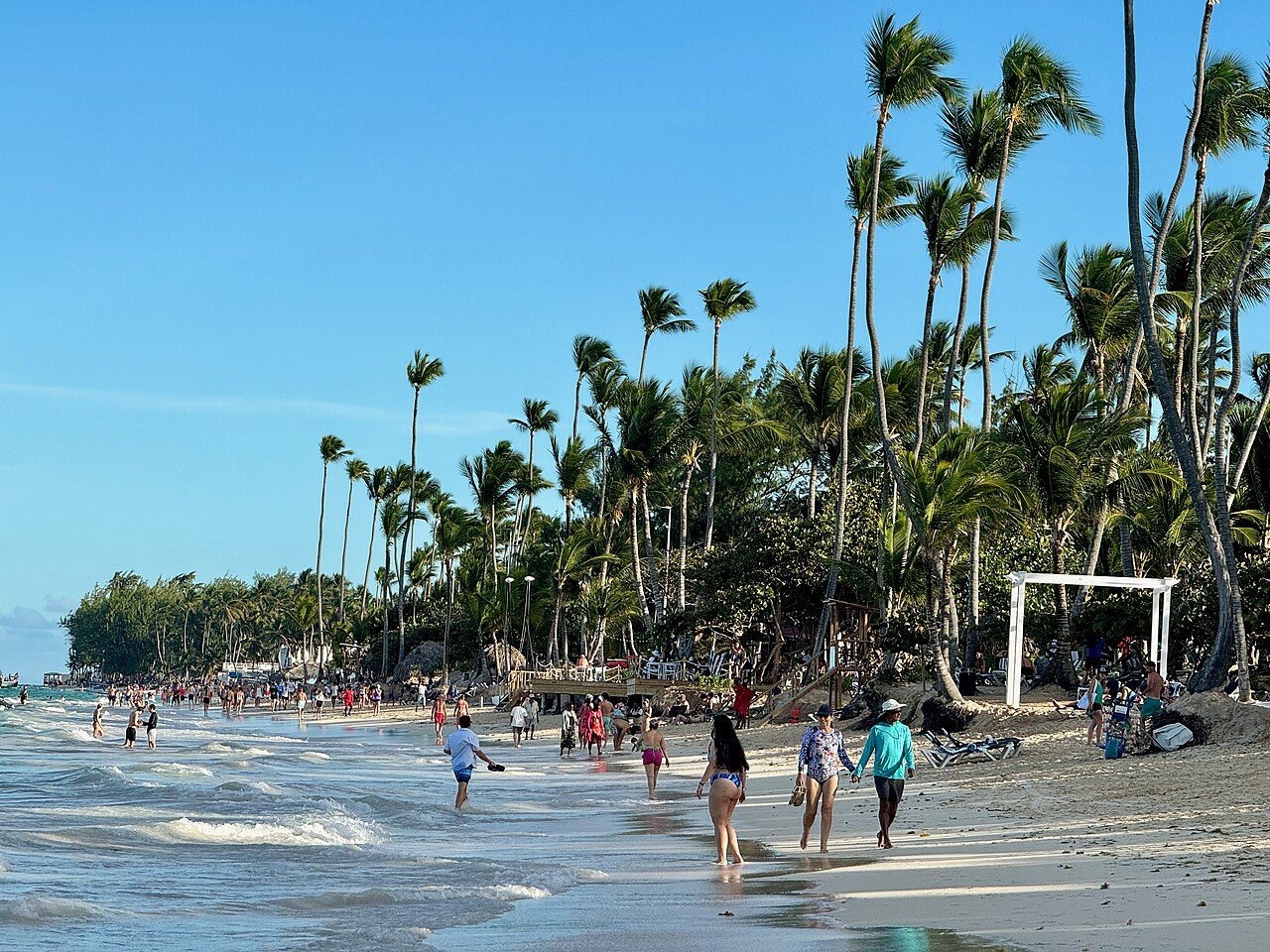
When the seaweed is lowest, what the record arrivals mean for prices and flights, and the practical rules of the resort strip.
Who is going to Punta Cana?
Going soon? Add your dates. Anyone who posts overlapping dates later sees you, and you hear about it.
Looking for a travel buddy? Ask travelers a question What should tourists avoid? Post what went wrong on your trip See who is going
Questions from the RuinMyTrip team. Answer one and start the Punta Cana conversation:
- What is overrated in Punta Cana, and what is worth it instead?
- What went wrong on your Punta Cana trip?
- What should tourists avoid in Punta Cana?
Nobody sees your dates until you post them, and nobody can message you until you say yes.
Punta Cana is the busiest arrival point in the Caribbean and it is not close. The Dominican Republic recorded 8,005,257 arrivals in January to August 2025, a national record, of which 6,085,053 came by air and 1,920,204 by cruise, and had reached 10,284,251 by the end of November, closing the year above eleven million. Punta Cana International Airport takes 58 per cent of the country's arrivals, followed by Las Americas at 24 per cent and Cibao at 13 per cent, and it finished 2025 with more than 11 million passengers, up 9.9 per cent year on year. December alone went from 975,450 passengers in 2024 to 1,087,621 in 2025. What that buys a visitor is frequency and price: more direct flights from more North American and European cities than any competing Caribbean beach destination, which is most of the reason the total cost of a Punta Cana week undercuts the alternatives.
Sargassum is the one thing to plan around properly. The University of South Florida's satellite monitoring recorded 37.5 million metric tons of sargassum across the Atlantic in May 2025, the largest figure since monitoring began in 2011 and 58 per cent above the previous record of roughly 22 million tons in June 2022. Every monitored region except the Gulf of Mexico exceeded its own historical record. Forecasting from USF and NOAA has since flagged 2026 as another major year with a real possibility of a new record. The consequence at beach level is a brown mat of decaying weed and a smell, and the resort answer is mechanical: crews and tractors work the sand from around 05:00 so guests do not see it. That works on an ordinary day. It does not work during a heavy influx.
So time it. The low season for sargassum runs roughly October to January, when the probability of a seaweed-free beach is high; the spring and summer months carry the risk. If your dates are fixed in the peak, choose a resort by how it manages the problem rather than by its photographs, and prefer stretches of coast with better natural exposure. This is worth asking about explicitly in writing before you book.
On the ground the rules are simple. Tap water is not drinkable, in the resorts or out of them; the country treats its municipal water but the distribution pipes and storage tanks after treatment are unreliable, so bottled water is the standard and worth using even for teeth. Transport is the main place unbudgeted money goes: an airport taxi into Bavaro is commonly quoted around 30 US dollars for up to four passengers, with quotes ranging much lower and much higher depending on the source, so fix the number before you get in and carry small US dollar notes. Tipping is expected on top of an all-inclusive rate whatever the brochure implies.
The structural criticism of Punta Cana is fair and worth stating plainly: it is a purpose-built corridor rather than a place. Bavaro and the resort strip were designed around the airport, and a visitor can very easily spend a week without seeing anything that is not built for them. The country outside is worth the effort. Higuey is close, the east-coast fishing towns are close, Samana and Los Haitises are a long day or an overnight, and Santo Domingo's colonial zone, the oldest continuously inhabited European-founded city in the Americas, is around three hours by road. Booking one day outside the fence is the difference between having been to the Dominican Republic and having been to a resort in it.
On seasons more broadly, December to April is the dry, high-priced peak with the best weather and the lowest sargassum risk at the start of it. Hurricane season formally runs June to November and the practical risk months are August to October, which is also when rates are lowest and when the seaweed peak overlaps. Travel insurance that covers weather disruption is worth its price in that window.
Been there? Correct us.
Prices move, routes close, places go downhill. A first-hand review is worth more than this guide and will be shown alongside it.
Share your experienceComments
Start the conversation.