Home / Guides / Oaxaca Practical Guide: OAX Transfers, Monte Alban Fees, Festival Months and Real Budgets
Oaxaca Practical Guide: OAX Transfers, Monte Alban Fees, Festival Months and Real Budgets
by RuinMyTrip Editorial · Jul 25, 2026
Month by month timing around Guelaguetza and Day of the Dead, official airport transfer rates, current INAH site fees, honest daily budget bands, and the scams worth knowing.
Oaxaca has a dry season from roughly October to April and a rainy season from May to September. The rains are afternoon events rather than all day washouts, with most mornings clear, and June is the wettest month. The most comfortable stretch is late January into early March, when the heat has not built and humidity is at its lowest. May, June, September and early October are the cheapest and quietest months, with lower hotel rates and thinner crowds, at the cost of daily afternoon storms. The two dates that will define your trip and your budget are the Guelaguetza, whose Lunes del Cerro performances at the Auditorio Guelaguetza on Cerro del Fortin fall on Monday July 20 and Monday July 27 in 2026, and Dia de Muertos, which runs October 31 to November 2. Both fill the city. Day of the Dead in particular is reported to push accommodation 50 to 80 percent above baseline with three to five night minimums, with many properties sold out by August or September, so book those months ahead or deliberately choose different dates.
Getting in means Oaxaca International Airport, about nine kilometres south of the centre and 20 to 30 minutes by road. The official airport colectivo, a shared van booked at the terminal booth with posted rates, costs 135 pesos to Zone 1, which covers the Centro Historico, and 210 pesos to Zone 2 for outlying neighbourhoods like San Felipe del Agua. A private taxi especial from the same booth is 490 pesos to Zone 1 and costs more to Zone 2, so check the posted board before you pay. Card payment is accepted at the booth. Plan for the absence of ride hailing: Uber and DiDi remain effectively banned across Oaxaca state as of 2026, so street taxis, the colectivo system and walking are the real options.
Getting around the city is overwhelmingly on foot. The Centro Historico grid is compact and the Andador Macedonio Alcala is pedestrianised. For the valley, colectivos and second class buses leave regularly for Mitla, Tlacolula and Santa Maria del Tule, and a hired driver for a full day of valley sites is the efficient alternative to a group tour.
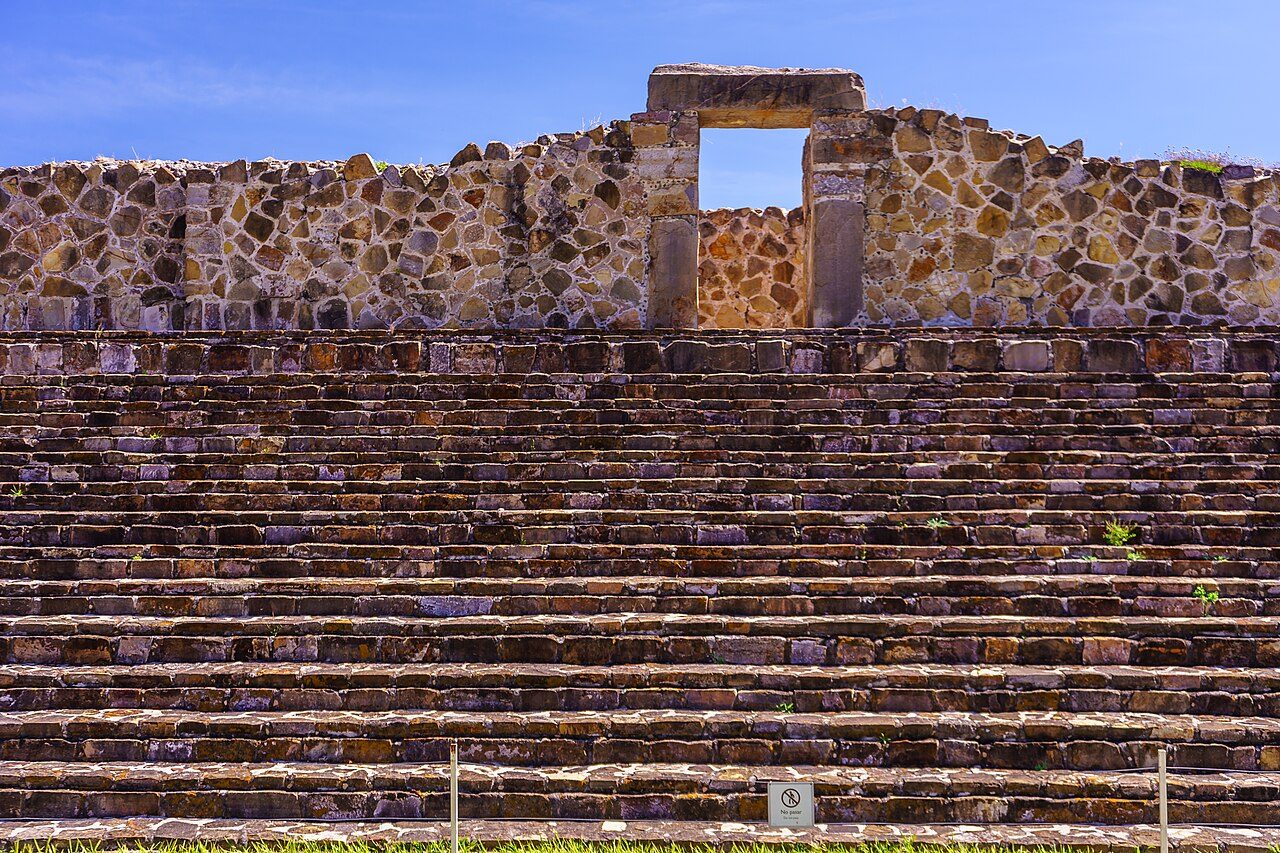
For sites, Monte Alban is the anchor. Open daily 8:00 to 17:00 with last entry at 16:00, admission is 210 pesos general and 105 pesos for Mexican nationals and residents under the INAH schedule that took effect January 1, 2026. Sundays are free for Mexicans and residents, which is exactly why Sunday is the worst day to go for space and quiet. Get there at opening for shade and empty plazas. The Museo de las Culturas de Oaxaca in the former convent at Santo Domingo is 210 pesos general and 105 for nationals and residents, open Tuesday to Saturday 10:00 to 17:30 with last entry at 17:00 and Sunday 10:00 to 15:30, closed Mondays, and the Tomb 7 Mixtec goldwork inside is genuinely world class. Mitla, 45 kilometres southeast, is listed by INAH at 210 pesos general and 105 pesos for Mexican nationals and residents, 8:00 to 17:00, last access 16:30, and its geometric stone mosaics are unlike anything else in Mexico. Hierve el Agua, the mineral terraces east of the city, is the one to approach with caution: entry is cash only and typically quoted in the range of 50 to 70 pesos plus a small community fee, but the site has closed unpredictably during an ongoing dispute between the co-managing communities, so confirm access within a week of going. The Sunday market at Tlacolula is worth building a day around. The thing to skip is any bargain mezcal tour priced under about 30 US dollars per person.
On budget, the verifiable line items are the airport transfer at 135 to 490 pesos, Monte Alban at 210 pesos, the Santo Domingo museum at 210 pesos and Mitla at 210 pesos. At roughly 18 pesos to the US dollar, that is about 7 to 27 dollars for the transfer and about 12 dollars for each of the three sites. Building outward from those, a realistic daily total is about 45 to 65 dollars for a budget traveller in a hostel or guesthouse eating at Mercado 20 de Noviembre, about 90 to 150 dollars for a mid range visitor in a Centro boutique hotel with restaurant meals and one valley excursion, and 250 dollars and up during Guelaguetza or Dia de Muertos, when lodging alone can consume the entire mid range figure.
On safety, Oaxaca state carries a US State Department Level 2 advisory, exercise increased caution, which is the same tier as much of the country and well below a do not travel designation. The practical risks in the city are petty theft in crowded markets and around festival crowds, and taxi overcharging, which is best managed by agreeing a fare before getting in since meters are uncommon. Carry cash for Hierve el Agua and rural markets, since there are no ATMs at the terraces. The commission driven mezcal tour is the most common commercial trap. Finally, be aware of the local context: tourism is up roughly 77 percent since 2020 and residents have protested over short term rentals, displacement and water access, so occasional demonstrations and road blockages are a genuine possibility rather than a curiosity.
Been there? Correct us.
Prices move, routes close, places go downhill. A first-hand review is worth more than this guide and will be shown alongside it.
Share your experienceComments
No comments yet.